Why Most People Should Use Target-Date Funds for Retirement

Target-date funds for retirement automate diversification, rebalancing, and risk reduction for simple consistent investing.

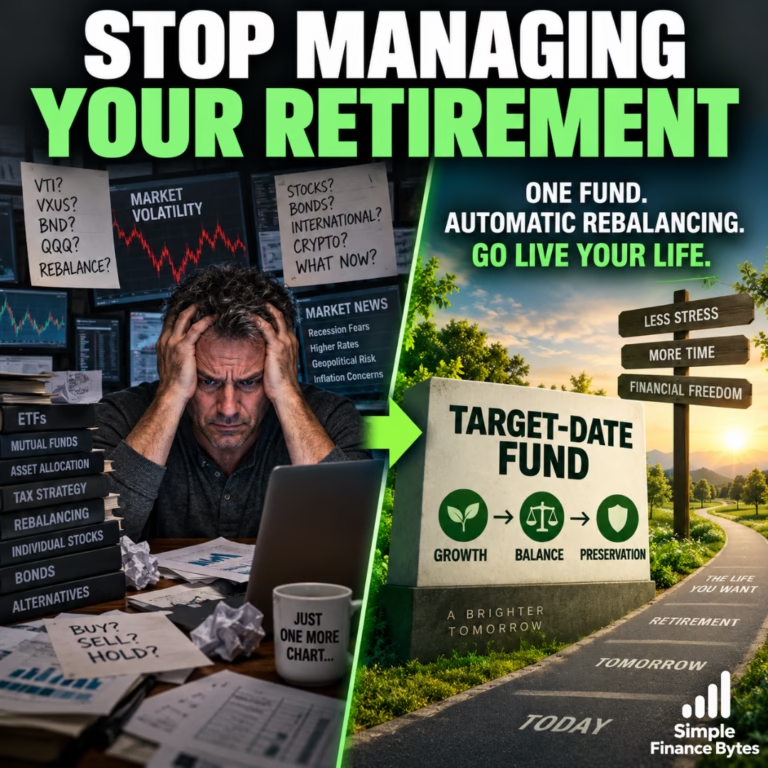
Target-date funds for retirement should probably be the default investment for far more people. Most Americans do not want investing to become a hobby. They want to know what to buy, how much to contribute, and whether they can automate the whole thing. For many people, a low-cost target-date fund answers all three questions. Want … Read more

Set It and Forget It Investing: Target-Date Fund + HYSA

Set it and forget it investing can be simple: use a low-cost target-date fund for long-term growth and keep about 10% in a competitive HYSA.

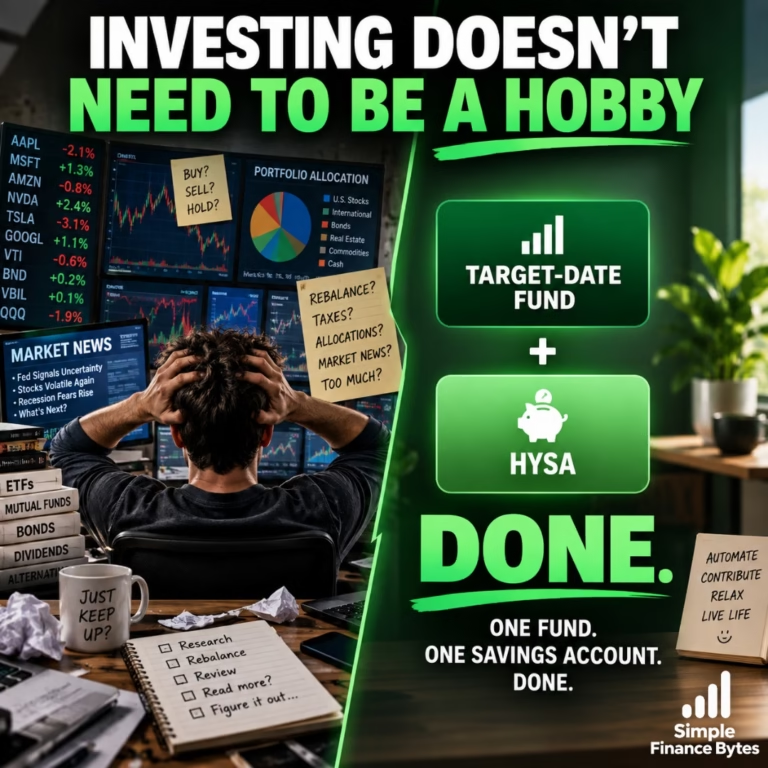
Set it and forget it investing should actually be simple enough to forget. Our normal Simple Finance Bytes portfolio uses just two investments—90% VTI and 10% VBIL—but even that requires some basic portfolio management. If you want the absolute simplest setup we would recommend, there is another option: one low-cost target-date fund for your long-term … Read more

Savings Priority Order: Save, Pay Debt, or Invest First?

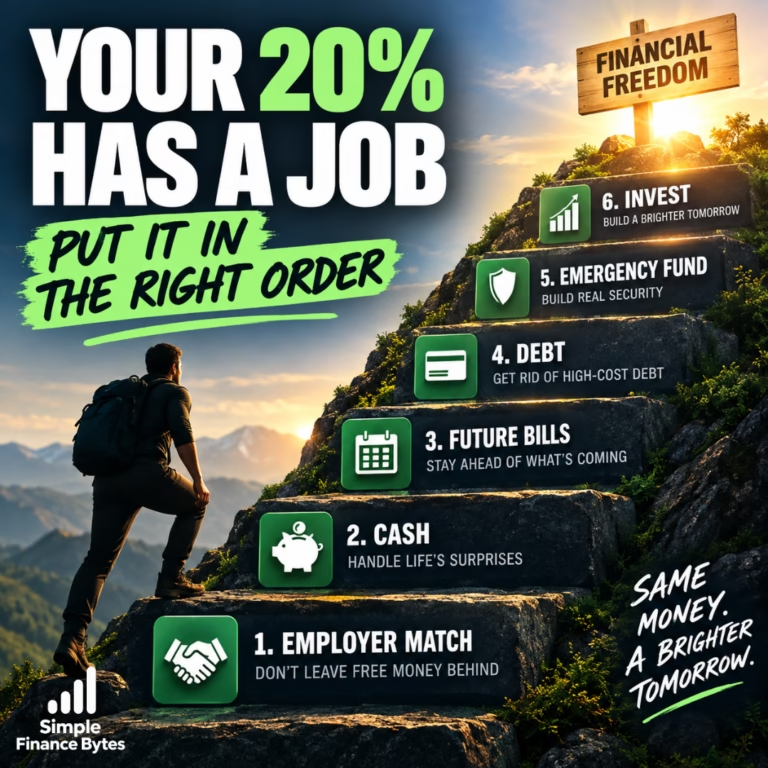
Use this savings priority order to decide what to fund first: employer match, cash reserves, future expenses, debt payoff, and investing.

The Simple Finance Budget sends 20% of your take-home pay to Savings & Investing. This savings priority order tells you what that 20% should fund first, so you are not trying to tackle six different financial goals at once. The answer is not to divide it evenly between six different goals. Use a simple savings … Read more

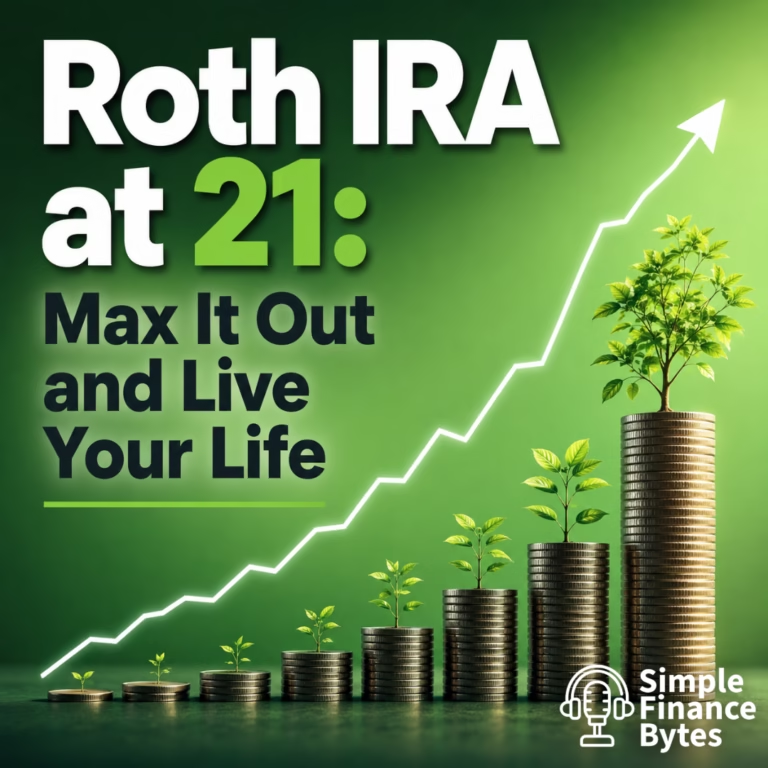
Roth IRA at 21: Max It Out and Live Your Life

Roth IRA at 21 turns $625 a month into over $7 million by retirement. Here is how to set it and live your life without pinching pennies.

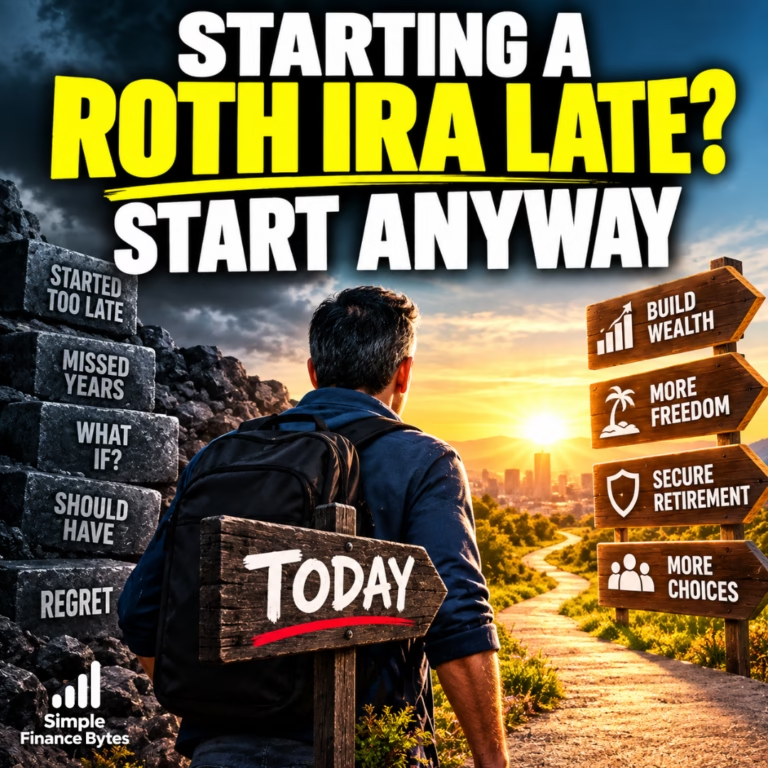
A Roth IRA at 21 sounds like something for later. It is not. If you start investing in a Roth IRA at 21 and do one simple thing every year until you retire, you can end up with millions of dollars and never have to think hard about money again. No spreadsheets, no stock picking, … Read more

Employer Match: Don’t Leave Free Money Behind

Employer match is free money your job gives you. When budgets get tight, drop to the match and keep it. Here is how to protect it.

Right now, a lot of people are looking at their monthly budget and wondering what has to give. Groceries cost more. Everything costs more. And that chunk coming out of your paycheck for retirement starts to look like an easy target. Before you pause your contributions entirely, there is one thing worth understanding: your employer … Read more

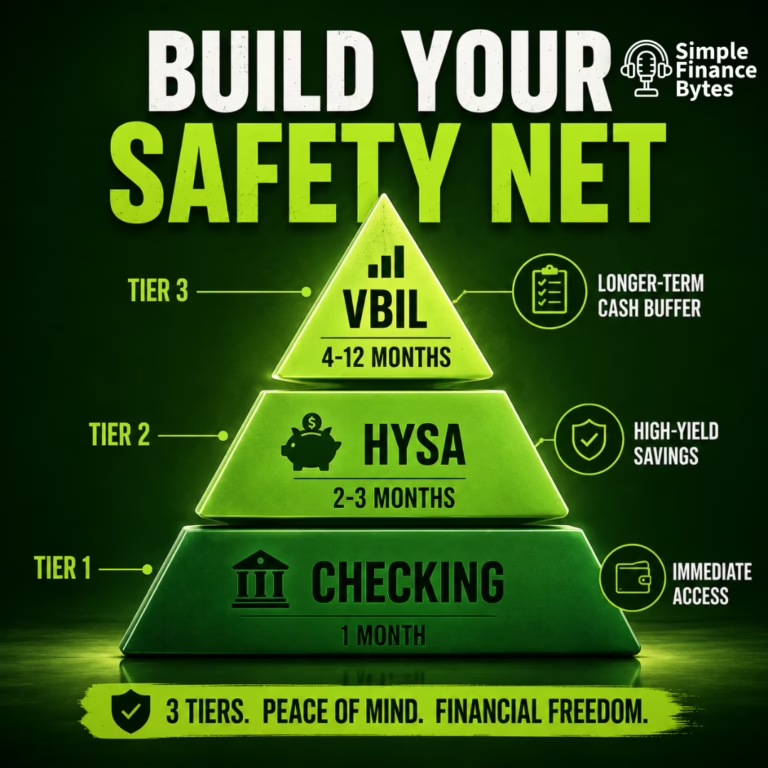
Emergency Fund Strategy: How to Stop Holding Dead Money

An emergency fund strategy for 2026 that protects your cash from inflation and tariffs. Stop leaving dead money in your savings account.

Your emergency fund strategy is the only thing standing between you and a catastrophic financial decision when life gets loud. Right now, life is very loud. Headlines are screaming about the shaky Islamabad ceasefire, grocery bills are climbing due to the latest 20% import tariffs, and American credit card debt has officially crossed the $1.25 … Read more

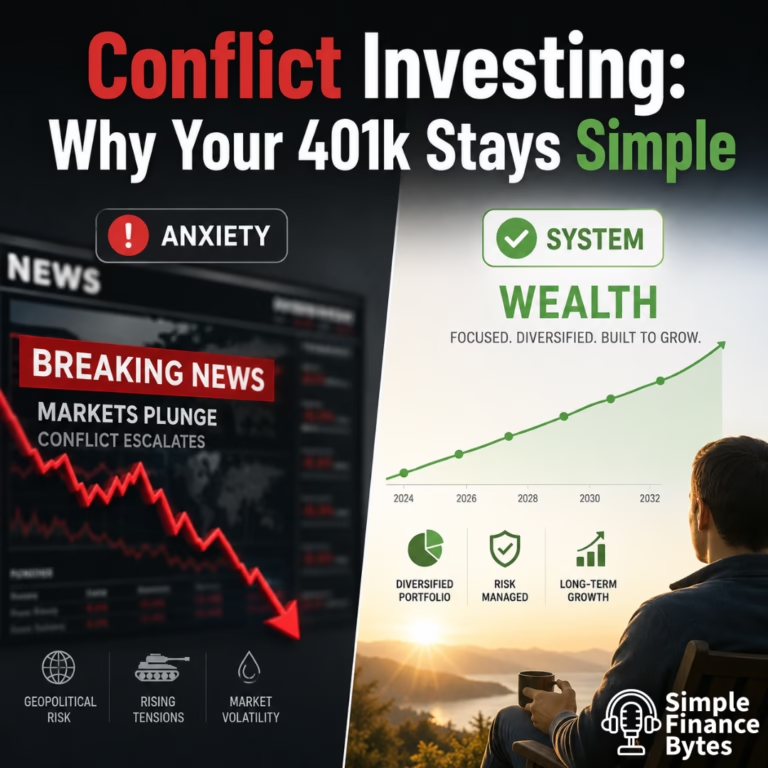
Conflict Investing: Ignore the Ceasefire

Conflict investing anxiety is high with the shaky ceasefire talks. Learn why the 2-fund system stays the same when the news gets loud.

Conflict investing is the primary topic of conversation this week as headlines focus on the shaky ceasefire talks in Islamabad. With oil prices hovering near $114 a barrel and shipping delays in the Strait of Hormuz, the impulse to “do something” with your portfolio is high. Most people see red in their accounts and feel … Read more

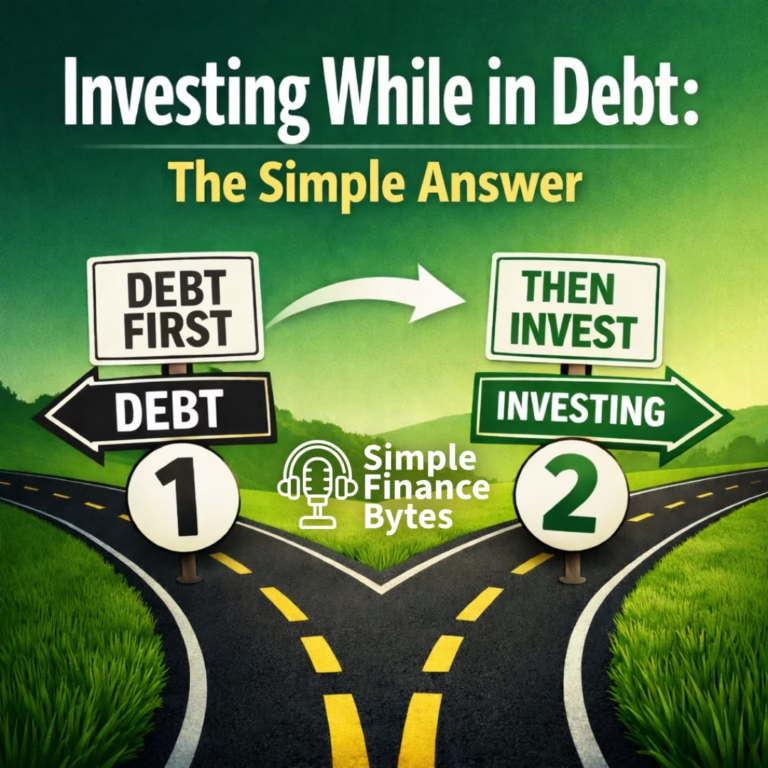
Investing While in Debt: The Simple Answer

Investing while in debt does not have to be complicated. A simple three-step framework tells you exactly where every dollar should go first.

Investing while in debt is one of the most common financial questions people wrestle with right now, and for good reason. Credit card rates are above 20%. The cost of everything is up. And the instinct to pause investing and throw everything at the balance is completely understandable. However, for most people, that instinct leads … Read more

Emergency Fund Strategy: How Much Cash to Hold Right Now

Emergency fund strategy for 2026: how much cash to hold, where to keep it, and why the answer stays the same when the economy gets noisy.

Your emergency fund strategy is the thing standing between you and a bad financial decision when life gets loud. Right now, life is loud. Tariffs, inflation anxiety, market swings, recession talk – all of it creates a pull toward doing something with your money. Most of the time, that something costs you. Want more amazing … Read more

Job Loss Financial Plan: How to Protect Your Money When Income Stops

Job loss financial plan starts before the pink slip arrives. Here is how to protect your investments and stay on track.

A job loss financial plan is not something you build after the bad news arrives. By then, the decisions are already harder, more expensive, and made under pressure. The right time to build the plan is now, when nothing is wrong. Here is what that plan looks like. Want more amazing money saving tips and … Read more