Employer Match: Don’t Leave Free Money Behind

Employer match is free money your job gives you. When budgets get tight, drop to the match and keep it. Here is how to protect it.

Right now, a lot of people are looking at their monthly budget and wondering what has to give. Groceries cost more. Everything costs more. And that chunk coming out of your paycheck for retirement starts to look like an easy target. Before you pause your contributions entirely, there is one thing worth understanding: your employer … Read more

Buy Store Brands: How the Bulk Buying Trap Empties Your Wallet

Buying in bulk isn't always a deal. Learn how to buy store brands at regular stores to save $50-100 a month without the hidden waste.

It is hard to walk down a grocery aisle right now without feeling a little bit of sticker shock unless you buy store brands. Prices on everyday items are high, and families are looking for any possible way to protect their cash. For a lot of people, the immediate reaction is to go big. We … Read more

Emergency Fund Strategy: How to Stop Holding Dead Money

An emergency fund strategy for 2026 that protects your cash from inflation and tariffs. Stop leaving dead money in your savings account.

Your emergency fund strategy is the only thing standing between you and a catastrophic financial decision when life gets loud. Right now, life is very loud. Headlines are screaming about the shaky Islamabad ceasefire, grocery bills are climbing due to the latest 20% import tariffs, and American credit card debt has officially crossed the $1.25 … Read more

Free Streaming Services: How to Stop the Digital Extraction

Free streaming services can replace your $200 monthly extraction. Stop the leak from your living room and build wealth in the 2026 economy.

The extraction economy is currently hitting the American living room harder than ever before, but swapping your bloated paid subscriptions for free streaming services can stop the leak immediately. While headlines focus on the unfolding energy crisis in the Middle East and persistent inflation on essentials, a quieter drain is happening right in your bank … Read more

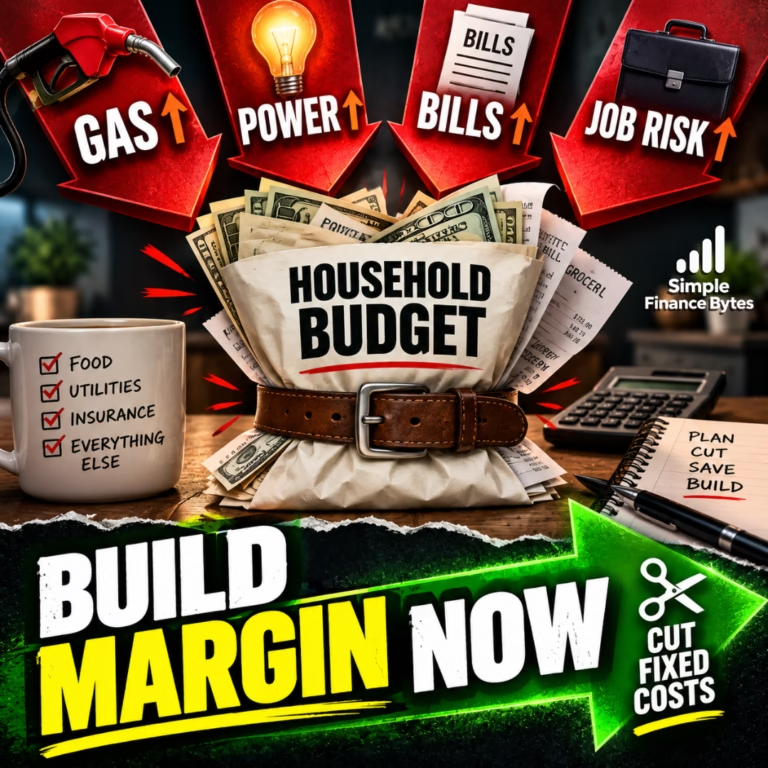
Emergency Budget: What to Cut First When Money Gets Tight

Emergency budget guide for when money gets tight. Learn the 3 tiers of what to cut, negotiate, and protect to save 300 to 800 dollars now.

An emergency budget is not the same as your regular monthly spending plan. Most budgets are designed for normal times when the goal is optimization or slow growth. But when the economy gets loud—with rising food prices, market swings, and the shaky ceasefire talks in Islamabad—you need a system for financial triage. You need to … Read more

3 Bucket Budget: Find Your Peace

3 bucket budget systems turn off the constant noise of tracking every cent. Simplify your life and find $200–$500 in monthly space.

Most people quit budgeting because it is too loud. It is a constant buzz of notifications, crumpled receipts, and late-night mental math. Every time you tap your card at a register, a little alarm goes off in your head: “Can I afford this? Which category does this fit into?” That isn’t a budget; it is … Read more

Tariff Food Prices: Save $100 on Groceries This Month

Tariff food prices are hitting your wallet hard. Save over $100 this month with these simple domestic swaps and prepaid pantry strategies.

Tariff food prices are the hidden tax sitting on your grocery receipt lately. You’ve probably noticed the total climbing even if you aren’t buying more food. Between the new 20% import tariffs and the shipping surcharges from the conflict in the Middle East, the cost of moving food across an ocean has exploded. Most people … Read more

Conflict Investing: Ignore the Ceasefire

Conflict investing anxiety is high with the shaky ceasefire talks. Learn why the 2-fund system stays the same when the news gets loud.

Conflict investing is the primary topic of conversation this week as headlines focus on the shaky ceasefire talks in Islamabad. With oil prices hovering near $114 a barrel and shipping delays in the Strait of Hormuz, the impulse to “do something” with your portfolio is high. Most people see red in their accounts and feel … Read more

Food Waste Costs: Stop Throwing Away $100+ Monthly

Food waste costs households hundreds monthly. Simple storage fixes and meal planning cut spoilage dramatically. Save hundreds to thousands.

Food waste costs the average American household somewhere between $100 and $200 every single month. That’s not loose change adding up over time. That’s real money going straight into the trash because food spoiled, went stale, or sat forgotten in the back of the fridge until it was no longer safe to eat. The EPA … Read more